 Space Gray/macbook-air-13-3-inch-500x500-200x200.webp)
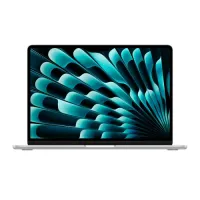


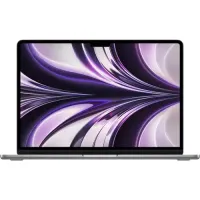
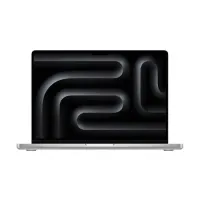

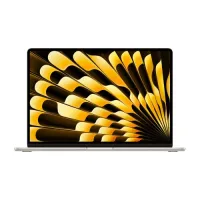

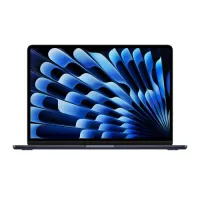


Apple's MacBook lineup in Bangladesh now covers three distinct product lines rather than two. The MacBook Neo, Apple's new entry level laptop, is currently priced from around ৳92,500 to ৳110,000 depending on storage. The MacBook Air, running M4 or the newer M5 chip, sits between roughly ৳159,000 and ৳185,000. The MacBook Pro spans the widest range, from around ৳242,000 for an entry M5 configuration up to roughly ৳655,000 for a fully specced M5 Max model. Below is a complete breakdown by series, chip, and configuration, along with buying guidance and the practical trade-offs other price pages leave out.
Figures above reflect current Bangladesh retail pricing across authorized Apple resellers as of this writing. Always confirm the exact live price and stock on our Apple MacBook page before ordering, since Apple's pricing and available configurations shift as new stock arrives. If you want to compare against other brands, you can also browse all laptop brands in Bangladesh to see how MacBook pricing stacks up against Windows options.
Until March 2026, MacBook buyers in Bangladesh really only had two choices: Air or Pro. That changed when Apple introduced the MacBook Neo alongside a refreshed Air and Pro lineup. Some retailers still describe MacBook as a two series product line out of habit; it is genuinely three now, and treating the Neo as an afterthought does buyers a disservice, since it is a real, distinct laptop with its own trade-offs worth understanding before you buy.
The exact price you pay depends on four things: which line you choose, the chip generation inside it, how much unified memory and storage you configure, and whether you are buying a base model or a Pro/Max configuration built for heavier work. We break down each of these below, using real current Bangladesh pricing rather than rough estimates.
The MacBook Neo is the most significant change to Apple's laptop lineup in years, aimed squarely at people who want the Mac experience without paying Air or Pro prices. It currently comes in two configurations: the 256GB model at around ৳92,500, and the 512GB model at around ৳110,000. Both run the same chip and memory, so the price difference is storage only.
Instead of the M series chip found in every other current Mac, the Neo runs on Apple's A18 Pro, a six core processor with a 5-core GPU, from the same family that powers the iPhone 16 Pro. It pairs this with 8GB of unified memory. The 13 inch Liquid Retina display uses an IPS panel rather than the mini LED or OLED technology in pricier Macs, and the aluminium body feels identical in hand to the Air, just in four brighter finishes: Silver, Indigo, Blush, and Citrus.
There are real trade-offs worth knowing before you buy, which several Bangladeshi retailers gloss over. The Neo has two USB-C ports rather than the three found on higher end Macs, and only one of them supports full 10Gbps USB 3 speeds, the other runs at USB 2 speed. There is no MagSafe, so charging happens through USB-C only. For browsing, writing, video calls, streaming, and general study or office work, none of this matters much. For sustained video editing, large scale design work, or heavy software development, you are better served by the Air or Pro, which is exactly how Apple has positioned it.
For a closer look at day to day performance and real battery life, our full MacBook Neo review on the EERNA blog covers this in more depth.
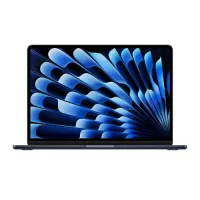
The MacBook Air remains the most popular choice for students and everyday professionals in Bangladesh. Current stock centres on the M4 and newly arrived M5 generations, with older M2 units occasionally available while stock lasts. The table below reflects real current configurations and pricing.
Note the base RAM here: current Air stock in Bangladesh now ships with 16GB of unified memory as standard, not the 8GB that was common in earlier generations. This is a meaningful upgrade if you last compared MacBook Air prices before 2026. The M5 Air is Apple's freshest refresh, and it keeps the same thin, fanless aluminium design, with a faster SSD and 512GB now the standard storage tier. If you specifically want the newest chip, confirm M5 availability directly, since M4 units still make up a large share of current Air stock and remain excellent value. For anyone assembling a full Apple setup, our MacBook accessories range covers chargers, adapters, and cases sized for every Air generation.
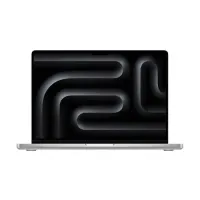
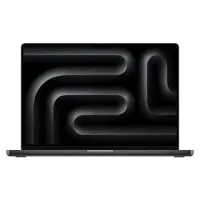
The MacBook Pro is built for people who need more sustained performance than the Air can offer: video editors, developers working with large codebases, 3D and design professionals, and anyone regularly running demanding software. Current stock covers M4, M4 Pro, and M4 Max, alongside the newest M5, M5 Pro, and M5 Max models following the March 2026 refresh.
A useful way to read this table is by RAM rather than just chip name. The base M5 model comes with 16GB to 24GB of unified memory, which suits general professional work. Once you move into M4 Max or M5 Max territory, RAM jumps to 36GB or 48GB, aimed at people running multiple large applications at once or working with 4K and 8K video. Note that some current Bangladesh retail listings still show the 16-inch M4 Pro alongside the newer M5 Pro at a similar RAM tier; the M5 Pro's extra CPU and GPU cores and Wi-Fi 7 support are the main upgrade, not a jump in memory.
Display quality is another practical difference worth knowing before you compare price tags. The Neo and Air both use a Liquid Retina display, which is sharp and colour accurate for everyday work but not built for professional colour grading. The Pro line steps up to Liquid Retina XDR, with far higher brightness and contrast, which matters if you edit photos or video for a living. Battery life follows a similar pattern: the Neo and Air are both rated for a full day of typical use thanks to their fanless, efficient designs, while the Pro trades a little battery life for the extra performance headroom under sustained load.
Chip names on their own do not tell you much unless you know what each family is built for. Here is the practical difference.
The A18 Pro is a mobile chip from the same family that powers recent iPhones. It handles browsing, writing, streaming, study tasks, and light photo editing comfortably, and Apple has tuned macOS to run well within its 8GB of unified memory. It is not designed for sustained heavy workloads, and Apple does not position it that way. Think of it as a proper Mac for everyday use, not a replacement for the Air or Pro.
M2, M4, and now M5 chips are Apple's dedicated laptop and desktop silicon, built for sustained performance rather than mobile efficiency alone. The base tier, plain M4 or M5, suits everyday professional work and moderate creative tasks. The Pro and Max tiers add more CPU and GPU cores along with significantly more unified memory, built for video editing, 3D work, machine learning, and large scale software development. The jump from M4 Pro/Max to M5 Pro/Max mainly adds more GPU cores and Wi-Fi 7 support rather than a fundamentally different architecture, so weigh that against the price difference for your specific workload.
If you are a student or a first time Mac buyer on a tight budget: the MacBook Neo is the obvious starting point. It gives you real macOS, genuine Apple build quality, and enough performance for lectures, assignments, browsing, and streaming, at a price that was simply not available from Apple before March 2026.
If you want a dependable everyday laptop for work, study, or general use: the MacBook Air in M4 or M5 configuration is excellent value, and now ships with 16GB of RAM as standard, up from 8GB in earlier generations. The 13 inch model suits portability first, while the 15 inch gives you more screen for a modest step up in price.
If you work in video editing, design, or software development professionally: look at the M4 Pro, M4 Max, M5 Pro, or M5 Max MacBook Pro. The extra unified memory matters more than the headline chip name once you are running multiple demanding applications side by side. Developers in particular benefit from the larger RAM pools and the Unix based macOS environment, and you can see more on this in our guide to best laptops for programming in Bangladesh, which covers MacBook alongside Windows alternatives at every budget.
If your priority is a desktop Mac rather than a laptop, our Apple Mac Mini desktop range runs the same M series chips at a lower price point, and pairs well with your existing monitor and peripherals.
MacBooks bought through unofficial or grey market channels often arrive without valid local warranty coverage, and some units are configured for a different region's power standards or App Store account setup. Buying from an authorized retailer such as EERNA avoids both problems, since every unit is sourced and warrantied through official channels rather than grey imports.
Before you buy, confirm the retailer can register the serial number for official Apple warranty support, check that the model number on the box matches the unit itself, and get the warranty card at the time of purchase. EERNA registers every MacBook against its serial number at the point of sale, which matters even more for the MacBook Neo and the newest M5 models, since grey market stock tends to appear for brand new releases before official channels have caught up.
It is also worth asking whether the unit you are buying is a BD spec model or an imported unit meant for another market. Region differences rarely affect day to day performance, but they can affect keyboard layout, power adapter type, and how straightforward warranty claims are if something goes wrong down the line. A reputable retailer will be upfront about this before you pay, not after.
The MacBook Neo is currently the cheapest MacBook sold in Bangladesh, priced from around ৳92,500 for the 256GB model and ৳110,000 for 512GB. Before the Neo's release in March 2026, the MacBook Air was always the entry point, starting well above these prices.
For most students, the MacBook Air offers the better balance of price, battery life, and portability, and now comes with 16GB of RAM as standard. The MacBook Pro only makes sense if your coursework involves heavy video editing, 3D modelling, or similarly demanding software.
MacBooks bought through an authorized retailer such as EERNA come with official manufacturer warranty support. Always confirm the retailer can register your serial number before you buy.
The MacBook Neo can handle lightweight coding, scripting, and web development in a pinch, but its 8GB of unified memory and limited port selection (two USB-C ports, one capped at USB 2 speed) become restrictive for larger projects, multiple containers, or heavier IDEs. For serious programming work, the MacBook Air with 16GB or a MacBook Pro is the better long term choice.
The MacBook Neo currently costs roughly 50,000 to 65,000 taka less than the entry level MacBook Air, reflecting its smaller battery, fewer and slower ports, IPS rather than higher-end display panel, and mobile grade A18 Pro chip in place of Apple's M series silicon.
Yes. Many developers choose MacBook Air or Pro models specifically for their Unix based macOS environment, strong battery life, and consistent performance across coding, testing, and deployment tasks. If you are commuting between office, home, and campus, our protective MacBook bags and cases range is worth pairing with any of these models. And if your work spans both Apple and other ecosystems, browsing our Apple iPad lineup alongside your MacBook is worth considering for lighter tasks on the move.